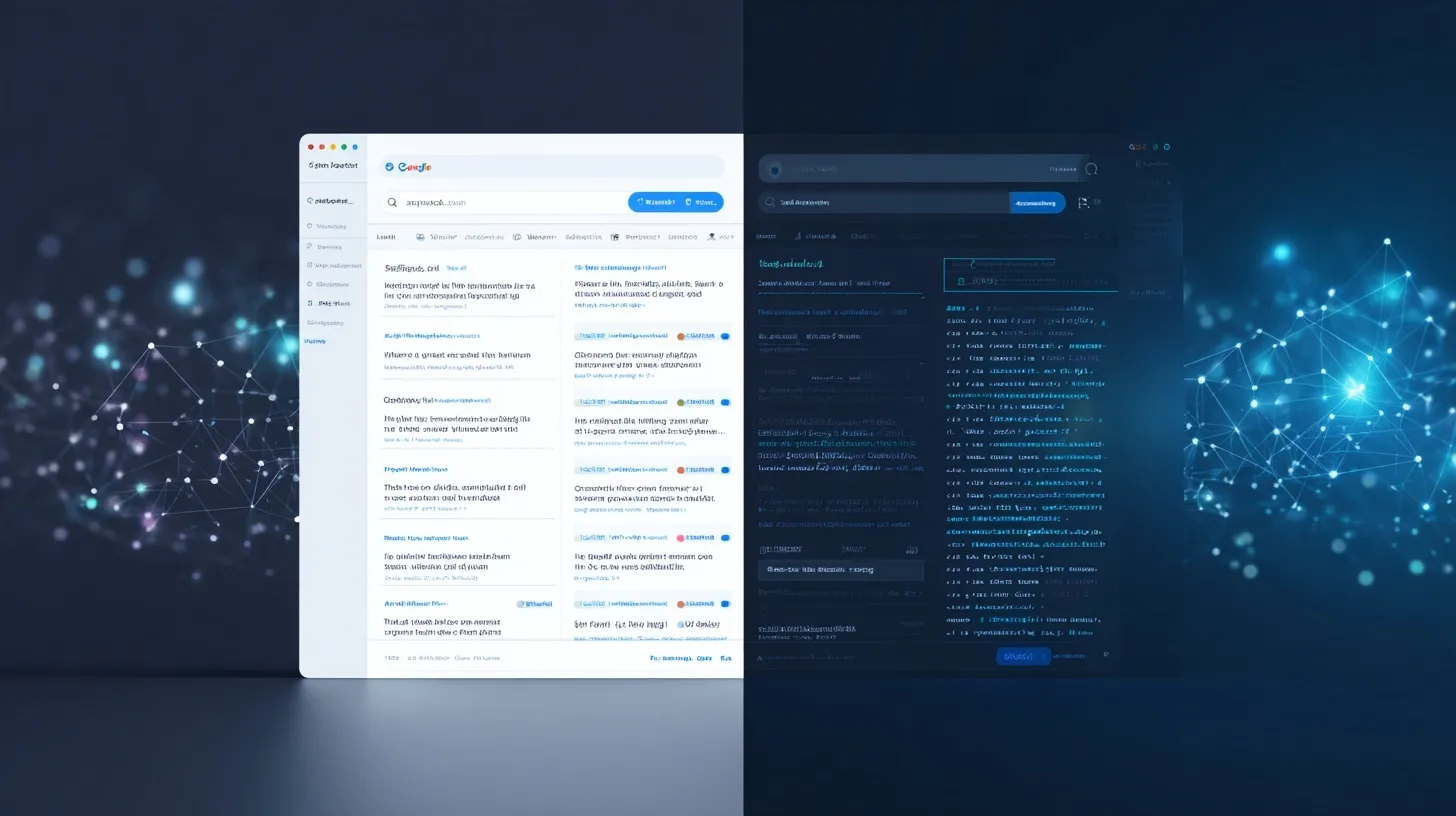
AEO (Answer Engine Optimization) focuses on getting your content cited as a source in AI-generated answers from ChatGPT, Perplexity, and Google AI Overviews. SEO (Search Engine Optimization) focuses on ranking your pages in traditional search results. They are not competing strategies — they are complementary layers of the same visibility strategy, and you need both.
The reason this distinction matters right now: ChatGPT processes over 2 billion queries per day, Google AI Overviews appear in roughly 55% of searches, and Ahrefs found that the top organic result loses 58% of its clicks when an AI Overview is present. Search is splitting into two channels. If you only optimize for one, you're invisible in the other.
This article breaks down exactly where AEO and SEO differ, where they share common ground, and how to run both without doubling your workload.
The Quick Comparison
Before diving into the details, here's a side-by-side view of how AEO and SEO differ across the factors that matter most.
| Factor | SEO | AEO |
|---|---|---|
| Primary goal | Rank in a list of 10 blue links | Get cited as a source in AI-generated answers |
| Success metric | SERP position (page 1, position 1-3) | Citation presence and frequency in AI answers |
| Target platform | Google, Bing (traditional index) | ChatGPT, Perplexity, Google AI Overviews, Claude, Bing Copilot |
| Content format | Keyword-optimized pages, long-form | Answer-structured, fact-dense blocks within pages |
| User interaction | User clicks a link and visits your site | User reads the AI answer; may or may not click through |
| Competition model | 10 organic slots on page 1 | 1-5 cited sources per AI response |
| Structured data role | Helps with rich snippets (nice to have) | Critical for entity recognition and citability (essential) |
| Key ranking signal | Backlinks, domain authority, keyword relevance | Content clarity, entity consistency, citation potential |
| Content freshness | Important for news, moderate for evergreen | AI-surfaced content is 25.7% fresher on average |
| Time to results | 3-6 months for competitive terms | Days to weeks (AI engines re-crawl more frequently) |
| Click behavior | 58.5% of searches already end without a click | AI referral traffic converts 4.4x higher when users do click |
| Who gets cited | Top-10 ranking pages dominate | Only 38% of AI citations come from top-10 results |
The last row is the one most people miss. In traditional SEO, if you're not on page 1, you're invisible. In AEO, a well-structured page ranking on page 2 or 3 can still earn citations in AI answers. That changes the game for smaller sites with domain expertise.
What SEO Optimizes For
SEO is a mature discipline with well-understood mechanics. At its core, SEO optimizes for three things:
Crawlability and indexation. Search engines need to find your pages, render them, and add them to their index. Technical SEO — site architecture, XML sitemaps, canonical tags, page speed — ensures this happens reliably.
Relevance. Your content needs to match what users are searching for. Keyword research, on-page optimization, title tags, and content depth signal to Google that your page is the best answer for a given query.
Authority. Backlinks from other trusted sites tell Google that your content is credible and worth ranking. Domain authority, referring domains, and link quality remain the strongest ranking signals in traditional search.
SEO has been the foundation of organic visibility for over two decades. It works. But it was designed for a world where users scan a list of links and click one. That world is shrinking.
What AEO Optimizes For
AEO optimizes for a different outcome: being selected, extracted, and cited by an AI engine that is generating an answer.
Where SEO asks "will Google rank this page?", AEO asks "will ChatGPT cite this content?"
The factors that drive AI citation are distinct:
- Direct answer clarity — Does the content contain a concise, self-contained answer block (40-60 words) that an AI can extract verbatim?
- Entity consistency — Does the content use consistent terminology for brands, products, and concepts so the AI can map it to the right knowledge graph node?
- Citation potential — Does the content contain original data, specific statistics, unique frameworks, or expert definitions that make it worth citing over other sources?
- Structured data — Does schema markup (FAQPage, Article, HowTo) give the AI explicit signals about what the content contains?
- Information density — Does every paragraph add a fact, data point, or actionable insight, or is it padded with filler that dilutes extractability?
These factors don't replace SEO signals. They layer on top of them. A page can rank #1 on Google and still never appear in an AI answer if the content isn't structured for extraction.
Where They Overlap
AEO and SEO are not as different as they might seem. They share several foundational requirements:
Quality content is non-negotiable for both. Google rewards comprehensive, authoritative content. AI engines cite content that is clear, factual, and well-sourced. Thin, vague content fails in both channels.
Structured data helps both. Schema markup improves rich snippet eligibility in traditional search and improves entity recognition in AI answers. Adding FAQPage, Article, and Organization schema benefits both strategies simultaneously.
Topical authority matters for both. Google rewards sites that demonstrate deep expertise on a topic. AI engines are more likely to cite sources with consistent, comprehensive coverage of a subject. Building topical clusters serves both goals.
Technical health is a shared prerequisite. If your site is slow, has broken pages, or blocks crawlers, neither Google nor AI engines will find and use your content. Core Web Vitals, mobile-friendliness, and clean site architecture benefit every channel.
E-E-A-T applies to both. Experience, Expertise, Authoritativeness, and Trustworthiness — Google's content quality framework — aligns with what AI engines look for when selecting sources to cite. Demonstrating real expertise helps you rank and get cited.
The overlap is significant. If you're already doing SEO well, you have a strong foundation for AEO. The gap is usually in content structure and format, not in fundamentals.
Where They Diverge
The real differences between AEO and SEO show up in three areas:
1. Format and Structure
SEO content is typically optimized for engagement: compelling headlines, narrative flow, internal linking for pageviews. The content is designed to keep a human reader on the page.
AEO content needs to be optimized for extraction. AI engines scan for self-contained answer blocks they can pull into a generated response. This means question-based headings, concise definitions near the top of sections, comparison tables, and bullet-point lists that can be lifted cleanly.
You don't have to choose one format over the other. The best approach is to write content that reads well for humans and is structured for AI extraction — direct answer blocks followed by expanded explanations.
2. Metrics and Measurement
SEO success is measured by rankings, organic traffic, click-through rate, and conversions from organic search. The tooling is mature — Google Search Console, Ahrefs, SEMrush.
AEO success is measured by citation frequency, citation position within AI answers, AI referral traffic, and share of voice across AI platforms. The tooling is newer. Monitoring tools track where you appear, while scoring tools evaluate whether your content is likely to be cited before publication.
3. The Definition of "Success"
In SEO, success is ranking on page 1. In AEO, success is being one of 1-5 sources that an AI engine chooses to cite in its answer. The competition model is fundamentally different — fewer slots, but potentially higher impact per citation.
Consider: when a user gets an AI-generated answer that cites your content, they've already been told by the AI that your source is relevant and trustworthy. If they click through, they arrive with higher intent. That's why AI referral traffic converts at 4.4x the rate of standard organic traffic.
Why You Need Both
The relationship between SEO and AEO is not either/or — it's sequential. SEO feeds AEO.
Here's why: most AI answer engines don't maintain their own independent web index. ChatGPT Search, Google AI Overviews, and Bing Copilot all pull from existing web indexes. If your content isn't crawled, indexed, and considered relevant by traditional search engines, AI engines won't find it either.
This creates a dependency chain:
- SEO gets your content indexed and discoverable — search engines crawl it, index it, evaluate its relevance and authority
- AEO gets your content cited once it's discovered — AI engines select it from the index based on structure, clarity, and citation potential
- Both drive traffic — SEO through organic clicks, AEO through AI citations and referral clicks
Dropping SEO would cut off the pipeline that feeds AI engines with your content. Dropping AEO means your indexed content gets passed over in favor of competitors whose pages are structured for extraction.
Gartner projects a 25% decline in traditional search volume by 2026. At the same time, 58.5% of US Google searches already end without a click to any website. The zero-click trend is accelerating. If your only strategy is ranking for clicks, your traffic ceiling is shrinking.
The answer is not to abandon SEO — it's to extend it. Keep ranking. Keep driving organic traffic. And structure every page so that when an AI engine evaluates it, it gets cited.
How to Add AEO to Your Existing SEO Workflow
You don't need to rebuild your content strategy from scratch. AEO layers onto existing SEO work with targeted additions at each stage.
1. Keyword Research: Add Question Mapping
Continue doing standard keyword research. Add one step: for each target keyword, identify the conversational questions users are asking AI engines. The average ChatGPT prompt is 23 words, compared to 3.4 words for a Google search. Map your keywords to the longer, intent-rich queries people type into AI.
2. Content Briefs: Add Answer Block Requirements
For every piece of content, specify where direct answer blocks should go. Each key question addressed in the piece needs a 40-60 word answer block immediately following the heading, followed by expanded detail.
3. Writing: Structure for Dual Consumption
Write content that works for both human readers and AI extraction:
- Use question-based H2/H3 headings
- Place concise definitions and answer blocks near the top of each section
- Use comparison tables for structured data that AI can reference directly
- Keep paragraphs to 3-4 sentences maximum
- Include specific data points, not generalities
4. Schema Markup: Go Beyond Basics
Most SEO implementations include basic Article schema. For AEO, add:
- FAQPage schema for every page with question-answer content
- HowTo schema for process-oriented content
- Speakable schema to mark content suitable for voice and AI assistants
5. Pre-Publication Scoring
Before publishing, score your content against AEO citability factors. This is the step most teams skip — and it's the one that makes the biggest difference. Catching structural problems before publication is far more efficient than discovering them after your content has been live for weeks without citations.
6. Post-Publication Monitoring
After publishing, track how your content appears across AI platforms. Are you being cited? For which queries? How does your citation frequency compare to competitors? Use this data to refine both your SEO and AEO approach iteratively.
Common Mistakes When Combining AEO and SEO
1. Treating AEO as a Separate Strategy
The most common mistake is running AEO as a completely separate initiative from SEO — different team, different content calendar, different pages. This doubles the work and misses the point. AEO should be integrated into your existing content workflow, not bolted on as a parallel track.
2. Over-Optimizing for AI at the Expense of Readability
Some teams hear "structure for AI extraction" and start writing robotic, keyword-stuffed content that no human wants to read. AI engines are sophisticated language models — they can tell when content is written for machines instead of people. Write for humans first. Structure for AI second.
3. Ignoring the SEO Foundation
Jumping straight into AEO without solid SEO fundamentals is like decorating a house with no foundation. If your site has crawl errors, slow load times, no schema markup, and weak domain authority, fixing those issues will improve both your SEO and AEO performance more than any AEO-specific tactic.
4. Measuring Only One Channel
Teams that track organic rankings but ignore AI citations — or vice versa — miss half the picture. Set up measurement for both: Google Search Console for traditional SEO, plus AI citation tracking for AEO. Compare trends across both channels to understand where your content strategy is working and where it's falling short.
Frequently Asked Questions
Is AEO replacing SEO?
No. AEO extends SEO — it does not replace it. Most AI answer engines pull from web-indexed content, so traditional SEO fundamentals like crawlability, indexation, and authority remain essential. AEO adds a content structure and formatting layer that makes already-indexed content more likely to be cited in AI answers.
Can I do AEO without doing SEO first?
Technically yes, but it's far less effective. AI engines typically retrieve content from existing web indexes. If your content isn't indexed and ranked at least reasonably well in traditional search, most AI platforms won't discover it. Build your SEO foundation first, then layer AEO on top.
Does AEO work for local businesses?
Yes. Local businesses that create well-structured, authoritative content about their services and service areas can earn AI citations for local queries. This is especially relevant as Google AI Overviews expand into local search results and users increasingly ask AI assistants for local recommendations.
What tools do I need for AEO?
You need two types of tools: a content scoring tool that evaluates your content for AI citability before publication (proactive AEO), and a monitoring tool that tracks how your content appears in AI answers after publication (reactive AEO). Some tools focus on monitoring only. AEOCrawler focuses on proactive scoring — evaluating content against 9 AEO dimensions before you publish.
How much extra work is AEO on top of SEO?
If you integrate AEO into your existing workflow, the additional effort is modest — roughly 15-20% more time per content piece. The main additions are writing direct answer blocks, adding more specific schema markup, and running a pre-publication AEO score. These steps become routine quickly and improve overall content quality for both channels.
Which should I prioritize — AEO or SEO?
If you're starting from zero, prioritize SEO fundamentals first (technical health, indexation, keyword-targeted content). Once your SEO foundation is solid, begin integrating AEO practices into every new piece of content. For teams with established SEO programs, start adding AEO to your workflow immediately — the AI search share is growing fast, and early movers will compound their advantage.
Score Your Content for Both SEO and AEO Readiness
The gap between SEO and AEO is not a wall — it's a bridge. Every page you create can rank in traditional search and earn citations in AI answers if it's built with both in mind.
AEOCrawler scores your content against 9 AEO dimensions and shows you exactly where your pages are strong and where they need work — before you publish. Stop guessing whether AI engines will cite your content. Measure it.