Answer Engine Optimization (AEO) is the practice of structuring your content so that AI-powered search engines — ChatGPT, Perplexity, Google AI Overviews, Claude, and Bing Copilot — can understand it, extract it, and cite it as a trusted source in AI-generated answers. Unlike traditional SEO, which focuses on ranking in a list of links, AEO focuses on being the answer itself.
The shift matters because search behavior is changing fast. ChatGPT now handles over 2 billion queries per day. Google AI Overviews appear in roughly 55% of all searches. And Ahrefs found that when an AI Overview is present, the top organic result loses 58% of its clicks.
For businesses, the implication is direct: if your content isn't structured for AI engines to cite, you're becoming invisible to a growing share of your audience.
This guide covers what AEO is, how it differs from SEO, why it matters for your business, and the specific steps you can take to optimize your content for AI-generated answers.
How AI Search Engines Work
Traditional search engines return a list of links. AI search engines do something different — they read, synthesize, and generate a direct answer, often citing the sources they used.
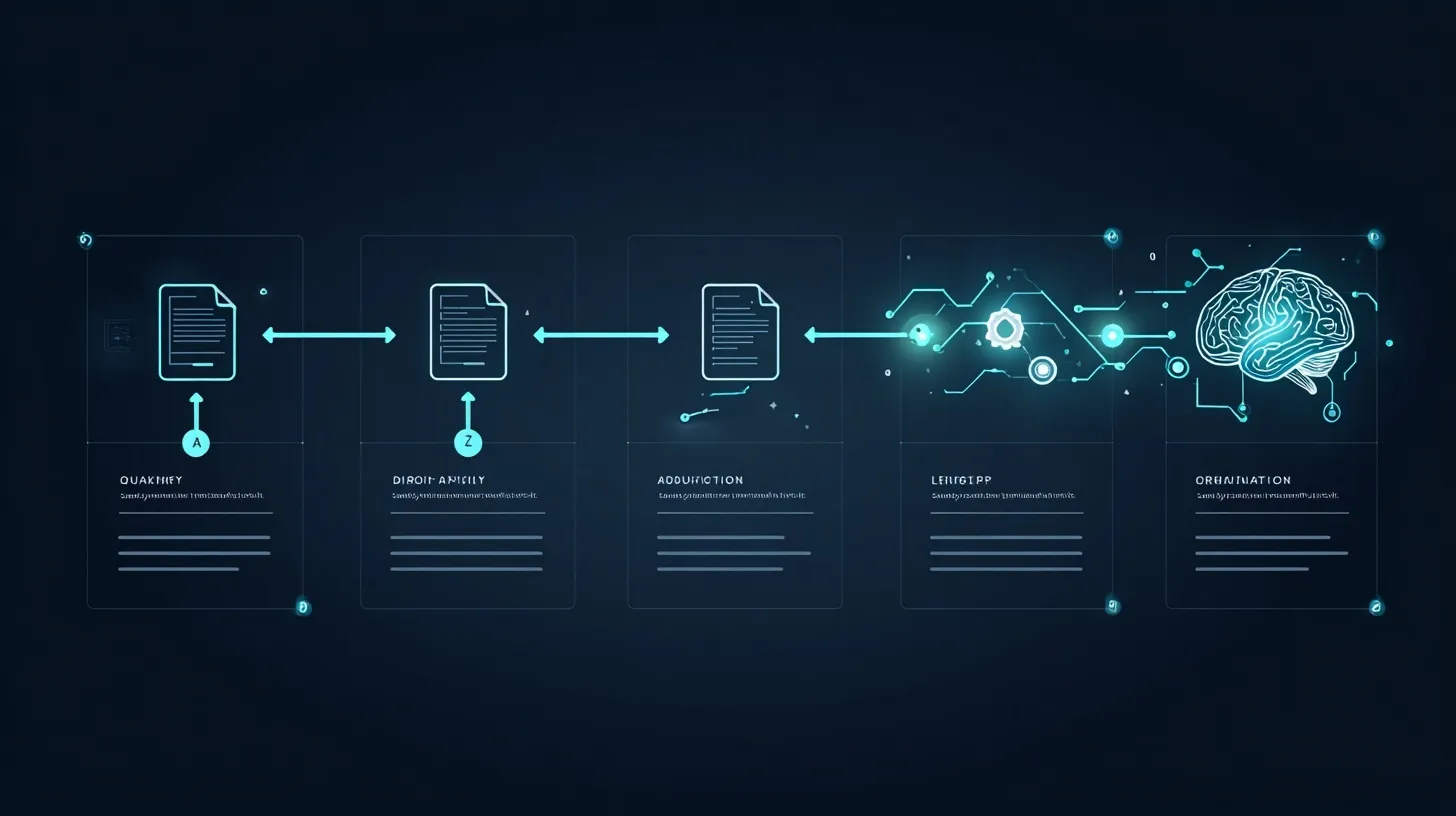
Most AI answer engines rely on a process called Retrieval-Augmented Generation (RAG):
- Query interpretation — The AI parses the user's question and identifies the core intent, entities, and sub-questions.
- Source retrieval — The system searches its index (or the live web) for relevant, authoritative content that matches the query.
- Answer synthesis — A large language model reads the retrieved sources and generates a natural-language answer, blending information from multiple pages.
- Citation attribution — The AI links back to the sources it used, giving the cited pages referral traffic and credibility.
The key insight: the AI is choosing which content to retrieve and cite. Content that is clear, well-structured, factually specific, and easy to parse has a higher probability of being selected. Content that is vague, unstructured, or buried in marketing fluff gets skipped.
This is the core problem AEO solves — making your content the one that AI engines choose.
AEO vs SEO: What's the Difference?
AEO and SEO share common foundations — both care about relevance, authority, and structure. But they optimize for different outcomes.
| Factor | SEO | AEO |
|---|---|---|
| Goal | Rank in a list of links | Be cited in an AI-generated answer |
| Success metric | Position on SERP (page 1, position 1) | Citation presence and frequency in AI answers |
| Content format | Keyword-optimized pages | Answer-structured, fact-dense blocks |
| User interaction | User clicks a link, visits your page | User reads the AI answer (may or may not click through) |
| Competition | 10 blue links on page 1 | 1-5 cited sources in the AI response |
| Structured data | Helps with rich snippets | Critical for entity recognition and citability |
| Content length | Often rewards comprehensive, long-form content | Rewards concise, direct answer blocks within longer content |
| Freshness | Important for news, moderate for evergreen | AI-surfaced content is 25.7% fresher than traditional results |
SEO is not dead. Most AI answer engines still pull from web-indexed content — pages that rank well in traditional search have a higher chance of being retrieved by AI engines. But ranking is no longer sufficient. A page can rank #1 on Google and still never be cited in an AI Overview if the content isn't structured for extraction.
The best approach is to do both: build pages that rank well in traditional search AND are structured for AI citation. AEO is an addition to your SEO strategy, not a replacement.
Why AEO Matters Now
Three data points explain the urgency:
1. AI search volume is exploding. ChatGPT reached 883 million monthly users in 2025, up from 300 million just ten months earlier. Perplexity processes millions of queries daily. Google AI Overviews now appear in over half of all searches. This isn't a niche trend — it's becoming the default way people find information.
2. Traditional search traffic is declining. Gartner projects a 25% drop in traditional search engine volume by 2026. Meanwhile, 58.5% of Google searches in the US already end without a click to any external website. The click is being replaced by the answer.
3. AI traffic converts better. When visitors do click through from an AI citation, they convert at 4.4x the rate of standard organic visitors and spend 68% more time on site. AI-referred traffic is higher intent — the user has already read a synthesized answer and is clicking for deeper engagement.
The window to establish AI visibility is now. Companies that build AEO into their content strategy today will compound their advantage as AI search adoption grows.
The Two Approaches to AEO
The AEO tools market has split into two fundamentally different approaches, though this distinction is rarely discussed:
Reactive AEO (Monitoring)
Most AEO tools on the market today — Otterly, Peec AI, Profound, Scrunch — focus on monitoring. They track how your brand appears in AI answers after the content already exists. They answer the question: "Is my brand being mentioned by ChatGPT?"
Monitoring is useful. You need to know where you stand. But monitoring alone doesn't improve your content — it just tells you the score after the game is over.
Proactive AEO (Content Scoring)
Proactive AEO takes a different approach. Instead of monitoring mentions after publication, it scores your content before or during the writing process. It answers the question: "Will AI engines cite this content?"
Proactive AEO tools analyze your content against the specific factors that determine AI citability — answer clarity, entity consistency, structured data, conciseness, and citation potential — and give you a score with actionable recommendations before you publish.
The difference is like the difference between checking your exam grade after the test (reactive) versus studying the right material before the test (proactive). Both have value, but only one actually improves the outcome.
What Makes Content AI-Citable?
AI search engines evaluate content differently than traditional search engines. Here are the factors that determine whether your content gets cited in an AI answer:

1. Direct Answer Clarity
The single most important factor. Does your content directly and clearly answer the question being asked? AI engines look for concise, factual answer blocks — typically 40-80 words — that respond to a specific query.
Weak: "In today's rapidly evolving digital landscape, many businesses are discovering that their online presence needs to adapt to new technologies..."
Strong: "Answer Engine Optimization (AEO) is the practice of structuring web content so that AI search engines can understand, extract, and cite it as a source in generated answers. It targets visibility in ChatGPT, Perplexity, Google AI Overviews, and similar platforms."
The second version is a direct answer that an AI engine can extract verbatim. The first version says nothing specific.
2. Entity Consistency
AI engines build knowledge graphs from entities — people, companies, products, concepts. If your content uses consistent terminology for these entities, the AI can confidently connect your content to the right query.
This means using the same name, title, and description for your brand, products, and services across every page. If you call it "AEO" in one paragraph and "AI search optimization" in the next, you're diluting the entity signal.
3. Structured Data and Schema Markup
Schema markup (JSON-LD) gives AI engines explicit, machine-readable information about your content. Key schema types for AEO include:
- FAQPage — Directly mappable to question-answer pairs
- Article — Signals content type, author, publish date
- Organization — Establishes brand entity
- HowTo — Step-by-step processes that AI can cite
- Product — Pricing, availability, specifications
- Speakable — Marks content suitable for voice assistants
Pages with relevant schema markup have a measurably higher chance of being cited because the AI doesn't have to guess what the content is about.
4. Content Structure and Formatting
AI engines parse content structurally. Content that uses clear formatting is easier for AI to extract:
- Question-based H2/H3 headings — "What is AEO?", "How does AEO work?"
- Bulleted and numbered lists — Easier to extract than paragraphs
- Comparison tables — Structured data that AI can reference directly
- Short paragraphs — 3-4 sentences maximum
- Definition blocks — Clear, concise definitions near the top of sections
5. Citation Potential (Source-Worthiness)
AI engines prefer to cite content that contains original, verifiable information:
- Original data or research findings
- Expert definitions and explanations
- Specific statistics with methodology
- Unique frameworks or models
- Step-by-step processes
- Comparison data
Content that simply rephrases what other sources say has low citation potential. Content that adds original analysis, data, or frameworks has high citation potential.
6. Conciseness and Information Density
AI engines extract relevant passages, not entire pages. Content with high information density — where every sentence adds a fact, data point, or actionable insight — has a higher extraction probability than content padded with filler.
This doesn't mean content should be short. It means every paragraph should earn its place. A 3,000-word guide where every section adds value will outperform a 1,500-word guide full of generalities.
How to Optimize Your Content for AEO: Step by Step
Step 1: Identify the Questions Your Audience Asks AI
Start with the questions your target audience is typing into ChatGPT, Perplexity, and Google. These tend to be longer and more conversational than traditional search queries — the average ChatGPT prompt is 23 words, compared to 3.4 words for a Google search.
Research methods:
- Check what AI engines currently answer for your key topics
- Review Google's "People Also Ask" for question patterns
- Look at customer support tickets and sales calls for real questions
- Use keyword tools filtered by question-format queries
Step 2: Structure Content Around Direct Answers
For each key question, write a clear, direct answer block (40-60 words) and place it immediately after the heading. Then expand with supporting detail, examples, and data below.
Pattern:
H2: [Question]
[40-60 word direct answer]
[Supporting detail, examples, data — 200-400 words]
Step 3: Add Structured Data
Add relevant JSON-LD schema to every page:
- FAQPage for pages with question-answer content
- Article for blog posts and guides
- Organization on your homepage and about page
- HowTo for process-oriented content
- Product for pricing and feature pages
Step 4: Optimize Entity Consistency
Audit your content for entity consistency:
- Is your brand name spelled the same way on every page?
- Are your product descriptions consistent?
- Do you use the same terminology for key concepts?
- Are your claims consistent across pages?
Step 5: Build Source-Worthy Content
Add original value to every page:
- Include specific data points, not just opinions
- Create original frameworks, checklists, or methodologies
- Add comparison tables with real numbers
- Cite your sources and methodology
- Update content regularly with fresh data
Step 6: Score Your Content Before Publishing
Use an AEO content scoring tool to evaluate your content against AI citability factors before you publish. This catches structural problems, missing answer blocks, weak entity signals, and formatting issues while you can still fix them — not after the content is already live and invisible.
Measuring AEO Success
AEO requires different metrics than traditional SEO:
| Metric | What It Measures | How to Track |
|---|---|---|
| AI citation frequency | How often your content is cited in AI answers | AEO monitoring tools, manual query testing |
| Citation position | Where your brand appears in the AI response (first cited, last cited) | Manual testing across platforms |
| AI referral traffic | Visits from AI engine citations | GA4 referral source filtering |
| AEO content score | Pre-publication quality of your content for AI citability | Content scoring tools |
| Entity recognition | Whether AI engines correctly identify and describe your brand | Brand query testing across AI platforms |
| Share of voice | Your citation frequency vs competitors for key queries | AEO monitoring tools |
The most important leading indicator is your AEO content score — it predicts citability before you publish, rather than measuring it after the fact.
AEO Across Different AI Platforms
Each AI search engine has different characteristics:
ChatGPT
- Largest user base (883M+ monthly users)
- Tends to cite authoritative, well-structured sources
- Favors content with clear definitions and factual specificity
- Growing integration with web browsing (ChatGPT Search)
Google AI Overviews
- Appears in ~55% of Google searches
- Pulls from Google's existing index — SEO and AEO are linked here
- Only 38% of citations come from top-10 Google results, meaning lower-ranking pages can still be cited
- Prioritizes freshness — AI-surfaced content is 25.7% newer
Perplexity
- Growing fast in research and professional queries
- Strong emphasis on source citation — always links back
- Favors academic-style, well-sourced content
- Good for B2B and technical content
Claude
- Used for longer, analytical queries
- Cites sources when given web access
- Favors comprehensive, well-structured content
- Strong in technical and professional domains
Bing Copilot
- Integrated into Microsoft ecosystem (Edge, Windows, Office)
- Uses Bing's index — similar dynamics to Google AI Overviews
- Growing enterprise adoption
Common AEO Mistakes
1. Treating AEO as FAQ-only optimization. FAQs are one AEO tactic, not the entire strategy. Entity consistency, content structure, schema markup, and source-worthiness matter equally.
2. Monitoring without optimizing. Knowing that AI engines don't cite you is step one. Actually restructuring your content for citability is where the value is.
3. Ignoring traditional SEO. Most AI engines pull from web-indexed content. If your page isn't indexed and crawlable, AI engines won't find it either. AEO builds on SEO — it doesn't replace it.
4. Writing for AI instead of humans. Content should be written for human readers and structured for AI extraction. Over-optimizing for machines at the expense of readability will hurt both.
5. One-and-done optimization. AI engines evolve constantly. Content needs regular updates, fresh data, and ongoing scoring to maintain citability.
Frequently Asked Questions
What does AEO stand for?
AEO stands for Answer Engine Optimization. It is the practice of optimizing content to be cited by AI-powered search engines like ChatGPT, Perplexity, Google AI Overviews, Claude, and Bing Copilot.
Is AEO replacing SEO?
No. AEO is an extension of SEO, not a replacement. Most AI answer engines rely on web-indexed content, so traditional SEO fundamentals (crawlability, indexation, relevance, authority) remain essential. AEO adds a layer of optimization for AI citation on top of existing SEO work.
What is the difference between AEO and GEO?
AEO (Answer Engine Optimization) and GEO (Generative Engine Optimization) refer to similar concepts. AEO focuses specifically on getting content cited as a source in AI-generated answers. GEO is a broader term that includes influencing how generative AI represents your brand. In practice, the terms are often used interchangeably.
How do I know if my content is optimized for AI search?
Use an AEO content scoring tool that evaluates your content against the factors AI engines use to select sources — direct answer clarity, entity consistency, structured data, citation potential, conciseness, and readability. A score above 70/100 indicates good AI readiness.
Which AI search engines should I optimize for?
Focus on the platforms where your audience searches. For most businesses, this means ChatGPT (largest user base), Google AI Overviews (highest search volume), and Perplexity (fastest growing). Optimize for one and you'll improve performance across all of them, since the same content principles apply. For platform-specific guidance, see how to optimize for Google AI Overviews and how to optimize for Perplexity citations.
How long does it take to see AEO results?
Unlike traditional SEO, which can take months to show ranking improvements, AEO results can appear faster because AI engines refresh their sources more frequently. Content improvements can be reflected in AI answers within days to weeks, depending on the platform and how actively it re-crawls your content.
Can small businesses benefit from AEO?
Yes. AEO levels the playing field because AI engines cite content based on quality and relevance, not domain authority alone. Only 38% of AI Overview citations come from top-10 Google results, meaning smaller sites with well-structured, authoritative content on specific topics can earn citations that would be difficult to achieve in traditional search.
What to Do Next
AEO is not a future trend — it's happening now. ChatGPT handles 2 billion queries daily. Google AI Overviews appear in over half of all searches. The businesses that structure their content for AI citation today will compound their visibility advantage as AI search adoption accelerates.
New to the terminology? The AEO glossary defines 25+ essential AEO and AI search terms precisely.
The practical starting point: pick your most important page, evaluate it against the citability factors above, and restructure it with a direct answer block, clear headings, structured data, and source-worthy content.
Or, score it automatically. AEOCrawler analyzes your content against 9 AEO dimensions and gives you an actionable score before you publish — so you can fix what's missing before AI engines evaluate your page, not after. Accelerator and Apex users can also run Citation Verification — querying Perplexity and ChatGPT directly to confirm whether your URL is actually being cited by AI search engines, not just predicted to be.