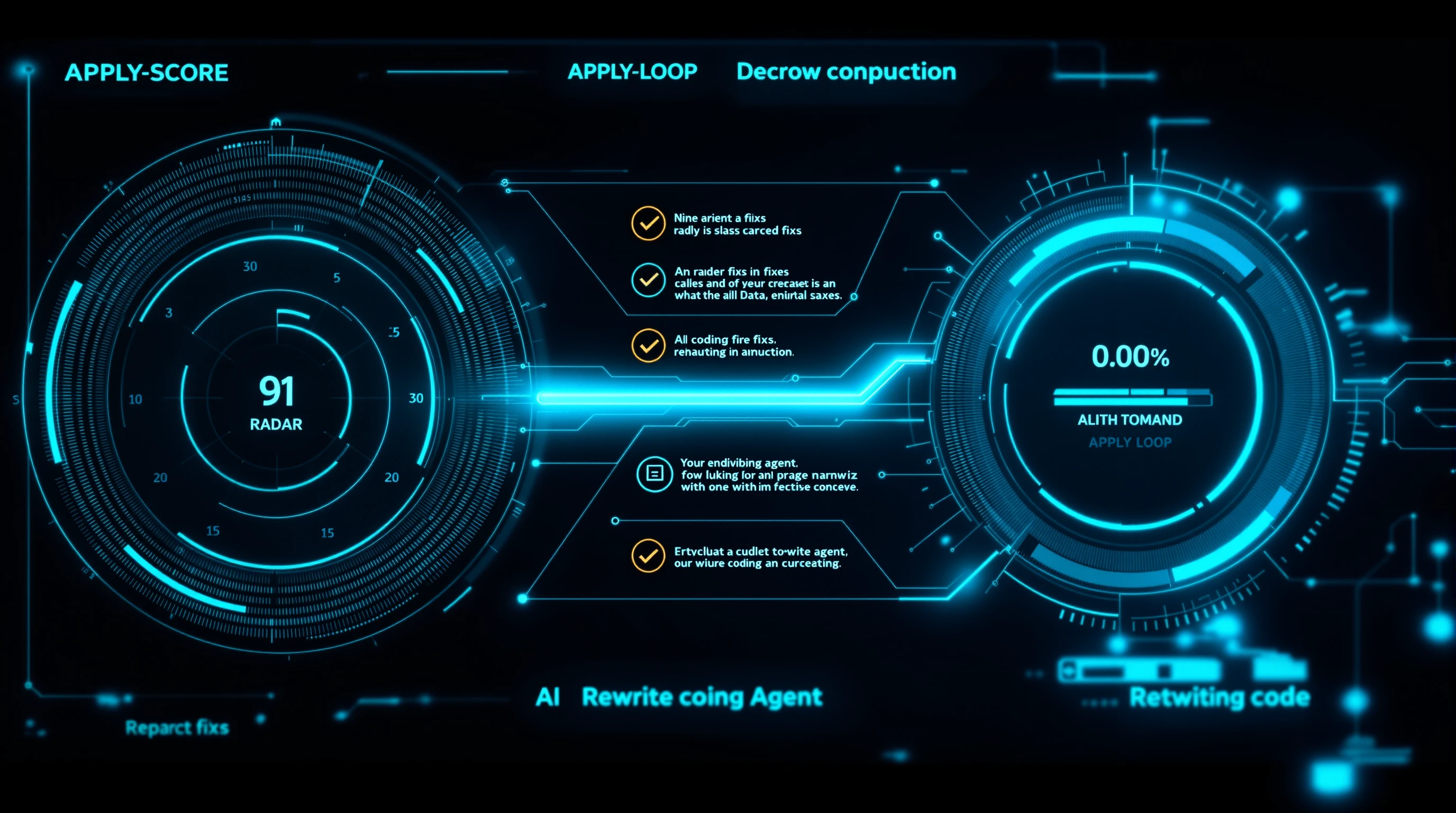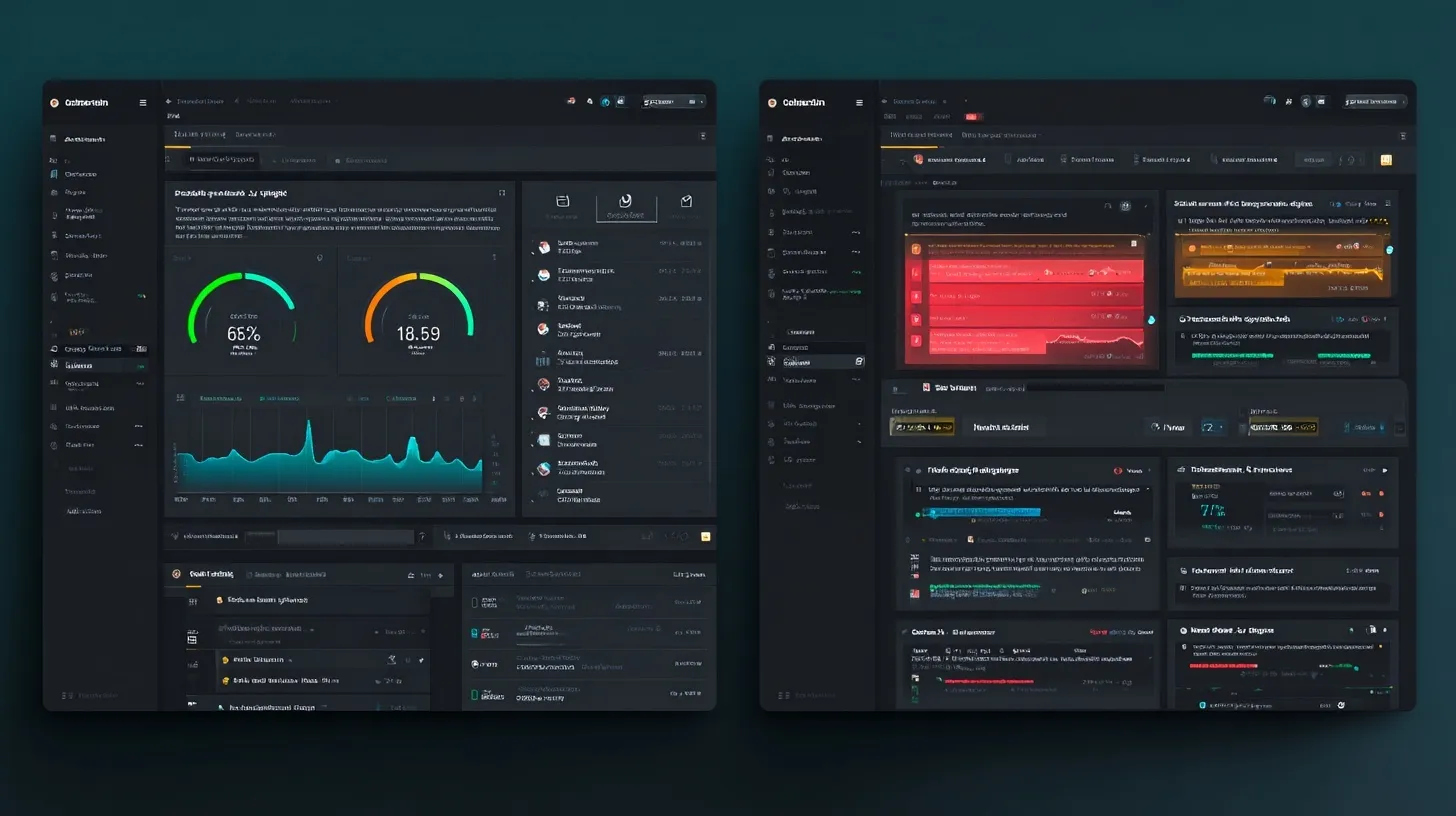
Most AEO tools on the market today monitor how your brand appears in AI-generated answers after content is already published. This is reactive AEO — useful for tracking visibility, but limited in its ability to improve outcomes. Proactive AEO takes a different approach: it scores your content against AI citability factors before publication, giving you actionable recommendations while you can still change things. Both approaches matter, but only proactive optimization actually moves the needle.
The distinction between reactive and proactive AEO is the most important strategic decision in AI search optimization today. Yet most companies don't know it exists. This article explains both approaches, where each one fits, and why a complete AEO strategy requires both.
The AEO Market Has Split Into Two Camps
The AEO tools market in 2026 is experiencing a surge of investment and activity. Peec AI raised a $21M Series A and hit EUR 650K in ARR within four months. Profound secured $58.5M from Sequoia and Kleiner Perkins. AI referral traffic grew 527% year over year. The market clearly sees the opportunity.
But beneath the funding headlines, a structural divide has emerged that most buyers don't notice. The market has quietly split into two fundamentally different categories of tools — and most companies are only aware of one.
Category one: Reactive AEO tools. These monitor how your brand appears in AI answers. They track mentions, measure share of voice, analyze sentiment, and report on visibility trends across ChatGPT, Perplexity, Google AI Overviews, and other AI platforms. Most of the well-funded players fall into this category.
Category two: Proactive AEO tools. These score your content against AI citability factors before or during the writing process. They analyze whether your content structure, entity consistency, answer clarity, and information density meet the criteria that AI engines use to select sources. Instead of telling you the score after the game, they help you prepare before it starts.
The problem? Nearly all market attention, funding, and media coverage has focused on category one. This makes sense from a market-timing perspective — "Is ChatGPT talking about us?" is an urgent, emotionally compelling question. But from a strategic perspective, monitoring your AI visibility without a systematic way to improve it is an incomplete strategy.
About 70% of organizations now believe AEO matters. But only about 20% are actively implementing it. That gap exists partly because the tools most companies encounter are monitoring tools — they reveal the problem without offering a mechanism to solve it.
What Reactive AEO Does
Reactive AEO tools serve a genuine and important function. Here is what the monitoring approach covers:
Brand mention tracking. Reactive tools query AI search engines for your key terms and track whether your brand is mentioned in the responses. They tell you if ChatGPT cites your company when someone asks about your category, and how that changes over time.
AI share of voice. Like share of voice in traditional media monitoring, reactive AEO tools measure what percentage of AI-generated answers mention your brand versus competitors. If someone asks Perplexity for "best project management tools" and your competitor is mentioned in 8 out of 10 responses while you appear in 2, that's your share of voice.
Sentiment analysis. Beyond whether you're mentioned, reactive tools analyze how AI engines describe your brand. Are the mentions positive, neutral, or critical? Is the AI accurately representing your product, or hallucinating features you don't have?
Multi-engine coverage. Good reactive tools track your visibility across multiple AI platforms simultaneously — ChatGPT, Google AI Overviews, Perplexity, Claude, Bing Copilot — since each engine surfaces different sources and your visibility may vary.
Trend tracking over time. Dashboards show how your AI visibility changes week over week, helping you correlate content changes or PR events with shifts in AI mentions.
This is valuable data. You absolutely need to know where you stand. The question is what happens next.
The Limitation of Monitoring Alone
Here is the core issue with a monitoring-only approach: tracking a metric does not change it.
The analogy that fits best: weighing yourself daily does not make you lose weight. The scale tells you the number. It does not tell you what to eat, how to exercise, or which habits to change. Monitoring is measurement, not intervention.
Consider a practical scenario. You use a reactive AEO tool and discover that when people ask ChatGPT "What is the best accounting software for small businesses in Sweden?", Fortnox is mentioned in 90% of responses and your product appears in 5%. You now have a clear, data-driven understanding of the problem.
Now what?
The monitoring tool cannot tell you why Fortnox is cited and you are not. It cannot analyze your content and identify which specific factors — missing answer blocks, weak entity consistency, absent schema markup, low information density — are causing the AI to skip your pages. It cannot score your content against the citability criteria and recommend specific improvements.
You are left to guess. Or to hire an SEO consultant who is also guessing, because the methodology for evaluating content against AI citation factors is still emerging.
This is not a criticism of monitoring tools — they do what they claim to do, and they do it well. But the industry conversation has conflated "AEO tool" with "AEO monitoring tool," creating a blind spot. When people say they're "doing AEO," they often mean they're tracking their AI visibility. Tracking is not optimizing.
The companies that gain AI citation advantage will be the ones that combine visibility data with a systematic method for actually improving their content before publication — not just measuring it after.
What Proactive AEO Does
Proactive AEO inverts the sequence. Instead of publishing content and then checking whether AI engines cited it, proactive tools evaluate content before publication and identify what to fix while changes are still free.
Here is what the proactive approach covers:
Pre-publication content scoring. Proactive tools analyze a page or draft against the factors AI engines use to select sources and assign a multi-dimensional score. This happens before you publish, giving you a window to improve the content while the cost of change is near zero.
Dimensional analysis. Rather than producing a single aggregate number, proactive tools break the score into specific dimensions — answer clarity, entity consistency, structured data presence, information density, citation potential, and readability. A single score tells you "good" or "bad." Dimensional scoring tells you exactly what to fix.
Actionable recommendations. For each weak dimension, proactive tools generate specific, implementable suggestions. "Add a 40-60 word direct answer block after your first heading." "Your entity name appears in 3 different variations — consolidate to one." "This section has 180 words of context before the first fact — front-load the data."
Workflow integration. The scoring happens as part of the content creation process, not as a separate monitoring activity. Content teams can score drafts, iterate, and re-score before the page goes live. This turns AEO from a reporting function into an editorial function.
Comparative benchmarking. Proactive tools can score your content against the content that AI engines are currently citing for the same queries, showing you the gap and what the cited content does differently.
The fundamental difference is timing. Reactive AEO tells you the result. Proactive AEO influences the result.
Reactive vs Proactive AEO: Comparison Table
| Factor | Reactive AEO (Monitoring) | Proactive AEO (Content Scoring) |
|---|---|---|
| When it happens | After publication | Before or during publication |
| What it measures | Brand mentions, share of voice, sentiment | Content structure, entity clarity, citability factors |
| Primary question | "Is AI talking about us?" | "Will AI cite this content?" |
| Actionability | Diagnostic — reveals the problem | Prescriptive — shows how to fix it |
| Output | Dashboards, trend reports, alerts | Dimensional scores, specific recommendations |
| Who benefits most | Marketing leaders, brand managers | Content creators, SEO teams, editors |
| Cost model | Per-query monitoring (ongoing) | Per-content scoring (per piece or unlimited) |
| Time to value | Days (initial visibility snapshot) | Minutes (score a page immediately) |
| Skill required | Interpret data, strategize separately | Follow recommendations, iterate |
| Impact on outcomes | Indirect — informs strategy | Direct — improves content before publication |
| Citation verification | Not available | AEOCrawler verifies citations against live AI engines |
Neither column is universally better. The right question is not "which one should I use?" but "which one am I missing?"
The Ideal AEO Stack: You Need Both
A complete AEO strategy uses both reactive and proactive tools, but the sequence matters.
Step 1: Score proactively. Before you publish any content, run it through a proactive AEO scoring tool. Evaluate it against AI citability dimensions. Fix the weak points — add direct answer blocks, tighten entity consistency, improve information density, add relevant schema markup. Publish content that is already optimized for AI citation.
Step 2: Publish and index. Get the optimized content live, ensure it's indexed by search engines, and give AI platforms time to discover and ingest it.
Step 3: Monitor reactively. Use a reactive monitoring tool to track how AI engines respond to your content. Are you being cited? For which queries? How does your share of voice compare to competitors? How does sentiment look?
Step 4: Verify citations. Use AEOCrawler's Citation Verification to close the loop between scoring and monitoring. This feature queries Perplexity and ChatGPT directly with 5 auto-generated search queries and checks whether your URL actually appears in cited sources — returning a Citation Score (0-100). It is the bridge between proactive scoring ("will this be cited?") and reactive monitoring ("is this being cited?"), providing real-time proof at the individual page level.
Step 5: Iterate. Use monitoring data to identify gaps — queries where you should be cited but aren't, or where competitor mentions are growing. Take those insights back to step 1 and create or improve content, scoring it proactively before republishing.
This creates a feedback loop: Score, publish, monitor, improve, repeat.
Most companies today only do step 3. They monitor, produce reports, and discuss the data in meetings. But without a systematic step 1 — proactive scoring before publication — the monitoring data rarely translates into measurably better content. The insight-to-action gap remains wide.
Companies that start with proactive scoring and add monitoring on top tend to see faster AI visibility gains. They are improving their content quality systematically, then verifying the improvement with monitoring data, rather than monitoring first and hoping content improvements follow.
What to Look for in a Proactive AEO Tool
If you decide to add proactive AEO to your workflow, here are the capabilities that distinguish a useful tool from a superficial one:
Multi-dimensional scoring. A single "AEO score" is better than nothing, but not by much. You need dimensional breakdowns — answer clarity, entity consistency, structured data, information density, citation potential, and other factors — so you know exactly what to improve. A score of 62/100 is not actionable. "Your answer clarity is 45/100 because you have no direct answer block in the first 60 words" is actionable.
Specific, implementable recommendations. The tool should not just tell you that a dimension is weak — it should tell you how to fix it. Generic advice like "improve your content structure" is not useful. Specific advice like "add an H2 with a question format followed by a 40-60 word direct answer" is useful.
Pre-publish workflow fit. The tool should work with content in draft state — before it goes live. If the tool can only analyze published URLs, it cannot serve a proactive function. You need to be able to paste a draft, score it, iterate, and re-score.
Scoring transparency. You should be able to understand why the tool scores content the way it does. Black-box scores that you can't interpret or explain to stakeholders have limited strategic value.
Benchmark context. A score of 72 is meaningless without context. Useful tools show how your score compares to the content that is currently being cited for relevant queries, so you know the threshold you need to clear.
The AEO vs SEO relationship is additive — proactive AEO builds on top of your existing SEO foundation. The best proactive tools recognize this and evaluate SEO fundamentals alongside AEO-specific factors.
The Competitive Landscape
The AEO tools market is still early. Here is how the current landscape maps to the reactive/proactive framework:
Reactive tools (monitoring-focused):
- Otterly ($29/mo) — AI search monitoring across multiple engines. Tracks brand mentions, analyzes SERP changes, and reports on AI visibility trends. Straightforward monitoring at an accessible price point. See detailed comparison.
- Peec AI ($89-499/mo) — AI visibility analytics with browser-based tracking. Raised a $21M Series A and reached EUR 650K ARR in four months. Focused on enterprise AI visibility measurement. See detailed comparison.
- Profound ($99-399+/mo) — Entity-centered AI visibility with $58.5M in funding from Sequoia and Kleiner Perkins. Strong on entity recognition and brand perception tracking.
- Scrunch ($300+/mo) — Monitoring combined with what they call an Agent Experience Platform. Higher price point, positioned for enterprise.
- HubSpot AEO Grader — Free brand perception checker. Basic, but a useful entry point for companies exploring AEO for the first time.
Proactive tools (content scoring-focused):
This side of the market is far less crowded. Most existing tools either focus on monitoring or offer basic content checks that don't specifically target AI citability factors. The gap between the investment flowing into monitoring and the investment flowing into pre-publication optimization is significant — and it is exactly this gap that creates the opportunity for proactive AEO tools.
This is not a zero-sum market. The companies investing heavily in reactive monitoring are building valuable infrastructure. The question is whether they will add proactive scoring to their platforms, or whether specialized proactive tools will fill the gap independently.
Frequently Asked Questions
What is the difference between proactive and reactive AEO?
Reactive AEO monitors how your brand appears in AI-generated answers after content is published — tracking mentions, share of voice, and sentiment. Proactive AEO scores your content against AI citability factors before publication, giving you specific recommendations to improve its chances of being cited. Reactive tells you the score; proactive helps you improve it.
Do I need both reactive and proactive AEO tools?
For a complete AEO strategy, yes. Proactive scoring optimizes content before publication so it has the best chance of being cited. Reactive monitoring tracks real-world AI visibility so you can verify results and identify gaps. The ideal workflow is: score proactively, publish, monitor reactively, then iterate.
What are the main reactive AEO tools available in 2026?
The leading reactive AEO tools include Otterly ($29/mo) for multi-engine AI search monitoring, Peec AI ($89-499/mo) for AI visibility analytics, Profound ($99-399+/mo) for entity-centered visibility tracking, Scrunch ($300+/mo) for enterprise monitoring, and HubSpot's free AEO Grader for basic brand perception checks.
Why isn't AEO monitoring enough on its own?
Monitoring reveals your AI visibility but does not provide a mechanism to improve it. Knowing that a competitor is cited by ChatGPT and you are not is diagnostic information — it identifies the problem without solving it. Improving AI citability requires analyzing your content's structure, entity consistency, answer clarity, and information density, then making specific changes before publication.
What should a proactive AEO tool score?
A proactive AEO tool should evaluate multiple dimensions of AI citability: direct answer clarity, entity consistency, structured data presence, information density, citation potential, content structure, readability, and query coverage. Multi-dimensional scoring is critical — a single aggregate number does not tell you what to fix. Ideally, it should also offer citation verification — the ability to check whether AI search engines actually cite your content, not just predict that they will.
Can I do proactive AEO manually without tools?
To some extent, yes. You can audit your content for direct answer blocks, entity consistency, schema markup, and information density using the citability factors outlined in the AEO guide. However, manual auditing is slow, inconsistent, and misses signals that automated scoring catches — particularly entity frequency analysis, structural coverage gaps, and cross-page consistency issues. Tools make the process faster and more reliable.
What to Do Next
The AEO market is growing fast, but most of the attention is flowing toward monitoring — tracking AI visibility after the fact. This creates an opening for content teams willing to go one step further: systematically scoring and optimizing content before it goes live.
The strategic advantage belongs to the companies that don't just measure their AI visibility but actively improve the content that drives it. Monitor your visibility, absolutely. But score your content first.